
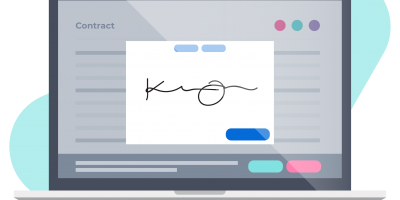


Thanks to the United States of America and European Union rules and regulation authorities, the electronic signatures are legally valid now. Electronic Signatures are enjoying legal validity not only in the US and EU but also in many other international legislations. However, while talking about guaranteed security, the legal experts need to re-examine the laws of electronic signature. In the following post, we will discuss the most advanced types of electronic signatures that increase the security of the electronic signatures and help the users improve the reliability over technology. It will also help you use electronic signature free download apps with authenticity and efficiency. Mainly, electronic signatures, based on biometric, and electronic signature with OTP are the topmost and the most advanced types in the market. We will both these types discuss in detail here:
What is an electronic signature with OTP?
- OTP means a one-time password. You will get an OTP when you will register yourself with an electronic signature. You will receive this one-time password on two locations, i.e., at your authorized mobile number and in the inbox of your authorized email address. An important point to mention is that you can use this password only one. If you have done it, you are eligible to sign the document electronically.
- The user can use any device to sign the document conveniently through availing an electronic signature with OTP.
Defining bio metric signature
- Through the most advanced technology of electronic signatures with biometric verification, the solution provider will send a data set with an electronic message. It will help them identify the signer uniquely as the author in the same way as it was signed with wet ink.
- Due to the features and characteristics, offered by the advanced electronic signature providers, you can add security during electronic transactions. The reason is that you can verify that there is no modification in the message during the signing process.
- When a signer uses a biometric signature, we can guarantee the integrity of the signer. It means that the signed authority did not undergo any type of violation, variation, or alteration after completing the signing procedure.
- Biometric information consists of speed, pressure, and acceleration of the stock to register the information on the probatory document. It is also important to mention that legal validity does not consist of only terms and conditions, which should be accepted,
- Rather it will need additional data to confirm that you are using a biometric signature. You can enjoy this feature when you are using an electronic signature with OTP.
Comparing electronic signatures with OTP and biometric verification in legal terms
1. Using OTP for verification of e-signature
Electronic signature with OTP offers some unique features that will be discussed here briefly:
2. It helps the signer link with the software uniquely.
- The signer will get a precise and unique link to implement a one-time password on the software. He will receive this link in the form of an email to his authorized link.
- As an addition to this email, the software solution providers offer some other measures to strengthen the process. Passports and validated IDs are the additional features that the solution provider offers you through OCR technology.
3. It helps the signer identify himself
- With the OTP system, you allow the signer to identify himself in the same way, as the owner of the telephone number is identified. However, it means that the identified signer will be the person, who holds the number, not the owner of the number.
- If it is so, a huge risk is involved in it while talking about the identification of the signer. With OTP, you can only accredit the owner of the telephone but cannot be informed about the actual signer.
4. The signer will use only those means of signature that he can use to sign with confidence and exclusive control over the device.
- The most successful electronic signature apps offer a specific environment to sign electronically with permission to sign when he feels comfortable. These apps send the request of signing electronically to the authorized email address of the user.
- When he receives the email, he can complete the process of signing while using any device, and whenever he feels comfortable.
5. An electronic signature with OTP confirms the integrity of the signing process by linking it to the signed information to avoid alteration.
- The electronic signature service providers attach the data with the time stamp that confirms the integrity of the electronic data. The timestamp has the responsibility to keep an eye on the signature process and the time, on which this activity has been performed.
- Due to the encrypted document and stamped time, after the signing process, it becomes impossible to modify the signature after a specific time. It means that the signer can sign only once, and when he has done it, no modification is allowed.
- Moreover, with time stamp, some solution providers also send associated data to improve the security of the signer’s signature. This associated data keeps the control of the date, time, the place where the signer signs, the authorized email address, and some other related information. In this way, an electronic signature with OTP is tried to keep closer to the electronic signature with biometric verification.
6. Using Biometrics for verification of e-signature
To use an electronic signature with biometric verification, the service providers offer some unique features. We will discuss these features here:
7. It helps the signer link with the software uniquely.
- The signer receives a verified, precise, and unique link through an email to use the most advanced electronic signature, based on biometric technology.
- To reinforce the security, the service providers also offer some additional validation measures that can consist of passports, validated IDs, and many others, which are generated through OCR technology.
8. It helps the signer enable himself for identification
- According to law, the system should offer such a system that can identify the signer with the best capacity. In this way, the system offers some additional features of protection to identify the subject, and with that, includes additional data for biometric verification purpose.
- While talking about biometric data, the system obtains data through a technical process in which the physical, psychological, and behavioral properties of a particular person are included. Through the biometric process, the system can identify the person uniquely.
- Every signer has the unique features of a unique handwritten signature that cannot be copied with ease and comfort. With biometric technology, we can implement some specific tools that recognize the signer with some specific behavioral tools that can confirm the identity of the signer.
- Through biometric data, the system gathers information that comes when the signer performs the duty of signing with wet ink. The system can include some specific points during this process like the speed, position, and pressure that the specific person enforces on the pen or cursor. The formation of the signature and positioning are also the key features of the biometric process.
- If the system wants more verification, the solution providers can send the signature to the calligraphic experts, who will provide you the exact, verified confirmation.
- By following these parameters, the advanced electronic signature tools can confirm the identity of the individuals. On the other hand, you cannot find such complexity while using electronic signatures with OTP.
- It offers only those types of evidence that can confirm the location, time, and date of the person, and on these bases, the system confirms the validity of the signer person. In this way, confirming the identity correlation is almost impossible.
- By using biometric technology to confirm the electronic signature, the system confirms the identity. With this procedure, the inclusion of a timestamp makes it the best choice to secure the whole procedure of signing documents more authentically.
- Therefore, the verification process to confirm the signer’s identity, electronic signature with OTP cannot compete with the process through biometric technology. It is the only way of providing foolproof security to the signer for completing the documentation process under the law. All other systems are not offering such a detailed procedure to make sure that every document is securely signed and verified.
9. It helps the signer create an electronic signature with a trust that he expects when signing the document.
Advanced electronic signature solutions make sure that the signer has all the right to decide when, how, and in which environment, he will sign the document. These solutions send the signature request to the user through an email address to the authorized email address.
Now, it is up to him when and how he will complete the procedure. Moreover, using whichever the device is also his domain to use for completing the process. Besides, the signer with the electronic signature while using biometric technology owns the signature that confirms the consent as well.
10. It helps the signer detect any modification in such a way that he is linked with the assigned data
- Using a timestamp provides integrity to the whole process that guarantees that the electronic signature is authentic and verified by following the procedure.
- After the confirmation given by the signer, the system keeps an eye on the document to detect the modification if any, and notify the concerned individuals or authorities.
- The system also guarantees the time, date, and location with the help of a timestamp. It means that no modification after a specific time can be done.
- Moreover, the system uses a timestamp to guarantee that no one has altered the content, given in the document. For that, the system uses an associated data set in which location, date, and time have been assigned.
- With that, the authentic email address and a mobile number have been engaged that makes the electronic signature with OTP verification as well. In other words, biometric technology keeps you secure throughout and offer the unchangeable and trustworthy documentation process digitally.
How does the advanced electronic signature process work?
An advanced electronic signature fulfills all the legal requirements that the United States of America and the European Union expects from the users, who are using electronic signatures. To improve the integrity of the single signatory, timestamping authorities are involved that helps the signatory identifies what is going on in the specific time, when he signed the document, and identify alteration after the time if any.
- Signatory identification is key in this process of providing the most advanced features related to electronic signatures. It needs technical information related to the signed person in which origin from where the request generated is included.
- Other related information can be about the time of the signing, behavioral, physical, and psychological factors as well. Moreover, the involvement of handwriting experts is also included to strengthen security.
- The solution providers of advanced electronic signatures are also offering versatility in the process by providing the opportunity to use all types of computer gadgets.
- For example, you can use your desktops, laptops, smartphones, and tablets to complete the process. This feature ensures that you have full control over the process of electronic signature.
- This system also offers the signed person to use a finger or cursor according to his requirement. In this way, he can control all types of faulty or fraudulent activities without his consent.
- Last but not the least, the system does not allow to change the signature by providing the signatory, an extension. It means that no one can change the signatures after the signatory has signed the document.
- The system uses encryption for the document that is generated after following the latest encryption standards. In this way, the system guarantees 100% security, reliability, and integrity.
Benefits of Advanced Digital Signature Solution
To increase the productivity of the organization and handle the security issues, using the most advanced electronic signature plays a key role in the current world. here, we will discuss the benefits that an organization enjoys in the case of implementing electronic signatures with advanced features:
This solution enables the signatory authority to complete the documents and contracts in no time that improves the overall performance of the organization.
With this system, you can also improve the procedure of consent, discussion, approval, authentication, authorization, signing process, and acceptance. It means that all the concerned authorities can go through the document simultaneously and reach the solution within no time.
- You are allowed to sign all types of documents according to law.
- This system simplifies the whole process of documentation.
- You can reduce the time of document processing to a large extent.
- The company can increase employee productivity.
- You can reduce the costs related to printing to 75%.
As all the laws and regulations accept electronic signature, you can remove the risks that are traditionally related to the traditional signatures.
To improve the environment, concerned people recommend not to use paper frequently. By implementing an electronic signature, we can also contribute towards the environmentally friendly world.
As you can store the documents digitally by using numerous types of cloud systems, the documents are always in your access, and you can sign them at any time without printing them.
The Bottom Line
Our whole discussion was based on the features that an advanced electronic signature solution provides to its users. This discussion helped us understand the difference between the two most advanced solutions related to electronic signatures, which are electronic signature with OTP and electronic signature equipped with biometric technology.
Now, we all know that biometric technology helps large organizations keep the documentation process protected to avoid all types of fraudulent and malfunctioning activities. This system also helps organizations improve productivity by saving time and money. It is also important to mention that the processing time is also improved with the introduction of this technology.
Previously, the electronic signatures were not serving the businesses in such a way that they can identify the signer more effectively. With the advanced feature of biometric verification, the e-signature providers have addressed this additional requirement as well.
For non-repudiation, the legal authorities claim to implement the legislative identification process. With the introduction of electronic signature with biometric verification, the organizations can fulfill all the legal requirements, which are mentioned in the law.
It was the legal requirement for the financial industry to improve the electronic signature process to avoid international money-laundering. The reason is that the previous electronic signature was helping terrorist finance for terrorism through money-laundering.
This advanced electronic signature process will improve the whole process, and protect the authorities to verify the signature and keep the terrorists and money-launders away from any ambiguous activity.
Overall, electronic signatures have become a key factor to improve the documentation process by involving technology for the signing process. It will help the organizations and individuals sign the documents with convenience, and after that, keep the documents secure and protected, even when someone tries to access the document and alters it for his benefits.
it means that the future belongs to electronic signatures but people have concerns about the legality and authentication. With an electronic signature, equipped with biometric verification, almost everything has been discussed, and we are hopeful that it can address the future needs as well.