


Nothing slows a business down than using paper and moving it around the offices on electronic Signature contracts. The process of printing out, scanning, revising a document, and either arranging a personal signature or mailing it can eat up your precious time on acquisition. And with the spread of COVID-19, it’s extremely rare for a sales professional to even consider a personal transaction, which makes electronic signatures (aka eSignatures) the perfect solution.
ESignatures are about more than just capturing an image of your signature. In this article, we’re going to take a detailed look at the many benefits of eSignatures. Everything you need to know to optimize their functionality.
What Are Electronic Signature Contracts?
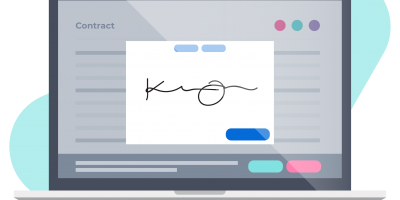
Electronic signature contracts are virtual representations of a wet signature. A sign that your signer would create with a pen and paper. Similar to the handwritten signature, eSignatures are used to identify the signer and confirm that they agree to the terms above the signature line. E-signature online apps are extremely versatile. They enable the recipient to conveniently sign documents by typing in their name or simply scribbling it with their finger or a pen directly via a mobile app.
It’s worth noting that, despite their notable differences, the terms eSignature and digital signature are often used interchangeably. Digital signatures, also called cryptographic signatures, are a type of electronic signature that is encoded and encrypt to prevent a signer from being impersonal and tampered with and to improve the general security of any signed document. In most cases, a digital signature is a more precise term when it comes to electronically sign documents. However, the term eSignature is much better known and used more often.
Are Electronic Signature Contracts legitimate?
Free e signature has been growing in popularity since 1999. In fact, several countries have rated them as equivalent to pen and paper signatures. This also includes the USA, thanks to the Electronic Signature in Global and National Commerce Act of 2000 (ESIGN) and the Uniform Electronic Transactions Act (UETA). These laws state that electronic signatures have the same legal status as pen and ink signatures on a piece of paper.
Despite the widespread adoption of the electronic signature, there are still a few cases where tactile documents and handwritten signatures need to be used:
- Wills, codes of conduct, and testamentary dispositions
- Adoption, Divorce, and Family Law
- Notification of Termination of Benefits
- Notification of the rental of a person’s primary residence
- Terminations of health or life insurance
- Notification of a callback
Documents Required For The Transport Of Dangerous Goods
In the US, you can even have documents notarize without having to print, sign, scan, or send them. E-Notaries can confirm your identity with a digital certificate – there is no need to appear in person.
In many countries outside of the US, eSignatures have the same legal weight as handwritten signatures. These include Canada, Australia, New Zealand, Chile, Colombia, Peru, South Africa, and many other Asian and European countries.
Electronic Contracts Under The ETL
The ETL provides that, unless otherwise stipulated in an offer, each offer, the acceptance of an offer, and information regarding payment and consideration can be express electronically. In addition, the legal effect or validity of declarations is not impairing solely by the fact that such declarations are in electronic form.
As long as the relevant documents meet the general requirements for a binding contract under the law of the Cayman Islands. The uses of digital contracts do not affect their validity or enforceability. This can include, for example, the use of online portals for negotiating, changing, uploading, and/or transmitting contract documents.
Electronic Signature Contracts Under The ETL Provides
According to the ETL, electronic signatures have the same legal effect as a wet ink signature, provided the electronic signatures and the method of creating such electronic signatures.
- Are reliable for their purpose and circumstances (see ETL reliability requirements below); and Otherwise meet the requirements of all relevant laws, regulations, customized contracts, or documents relating to such signatures.
- The means for creating the electronic signature are associated with the respective signatory and no other person;
- The means for creating the electronic signature are under the control of the respective signer and no other person at the time of signing;
- Any change to the electronic signature made after the time of signature can be proven. If one purpose of the legal requirement for a signature is to ensure the integrity of the information to which it relates. Any change to that information made after the time of signature is verifiable.
- According to the ETL, anyone who relies on an electronic signature bears the legal consequences. If they fail to take reasonable steps to verify the reliability of an electronic signature.
- Please note the following practical considerations to keep in mind regarding the use of, and reliance on, electronic signatures:
- Similar to relying on wet ink signatures, anyone who relies on an electronic signature must ensure that the respective signatory has been properly authorized.
- As a rule, we would expect the “reliability” criteria set out in the ETL to be met if you rely on a reputable digital signature service such as DocuSign, Adobe Sign, or e-Sign.
- You should take special care that the email addresses of all signatories for forwarding electronic execution instructions are authentic.
- Electronic execution instructions for different signers should be ensured. That’s means of creating the electronic signature is only under the control of the respective signer.
Are Electronic Signature Contracts Safe?
The idea of posting personal information or important documents on the Internet can be a little daunting for some customers. However, the security measures associated with eSignatures have come a long way since their inception, which is why they are trusted by both small businesses and corporations.
Words like “Public Key Infrastructure”, “Algorithm”, “Signing Certificate” and “Certification Authority” keep appearing about electronic signatures.
When you double-click the “New Signature” button on an electronic document, a lot of technology goes on behind the scenes to ensure that the signers are who they claim to be and that the information remains secure in any file format.
The question is why you want these extra layers in the security of E Signatures. If you need them then why not?
How To Use Them?
The key to using signatures is to choose a reputable service that is willing to explain the security measures. They have in place for your recipients to fill out and sign documents. DocSignPro is the best e signature app that generates unique authority certificates that record all signatures. On the agreement, IP addresses, the date (s), and a timestamp. So, that you have a detailed audit trail for all your electronically signed business PDF documents, Word- Documents, or image files (png, jpg, and adobe are all supported).
Conclusion
There are several reasons why you should use the electronic signature app. The most obvious one is convenience – not just for you, but for your customers as well. When your customers no longer have to take the time to print, sign, and scan documents, or mail them back to you, they can get things done faster, which means you will close more deals.
This gives you an advantage over competitors who have not yet fully switched to online documents. Due to COVID-19, many companies are struggling to migrate to remote working. Implementing electronic signature software will undoubtedly make the transition easier. Signing documents online also means you reduce wasted resources. Like printer cartridges, paper, envelopes, postage, and postal workers who risk their health transporting unimportant mail.
eSignatures have had the same legal streak in countries around the world due to the rapid monetization of eCommerce. These unprecedented times and the new technology available that has made eSignatures secure. The convenient option that is quickly becoming the norm rather than a novelty Weight received like handwritten signatures