
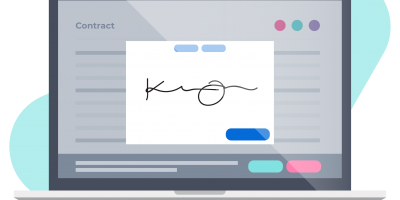



Creating customized Contracts is essential for those who work online. They help you and your customer know exactly what to expect and save you from guessing. They determine the exact nature of the work, the prices, the deadlines, and the responsibilities.
To create a customized contract, there are no legal requirements for pay because there is no clear idea of when the work is done. As a web designer and developer, you need contracts for your daily work. Drawing up a contract can be time-consuming and it’s all too easy to leave out something important.
Hiring someone to do this for you can be expensive. Unfortunately, there are so many of them that finding a good template can take as much time as creating one. Finding just one is not enough. You need a contract that contains all the elements you need. You need a contract that has been testing and try … one that has stood the test.
Elements Of A Good Contract
Many designers put contract templates on their website or another website that manages documents. These templates have often been around for years and they have proven themselves.
Sometimes they are revise every few years. They are editable, and most of all they can be gotten as PDFs and Word documents. Negotiating contracts is critical to business success as the terms of the contract set the details of high-value transactions.
The use of a single misstep can also result in a big financial loss. In the past, contract management was an ad hoc process with different areas of the company following different guidelines. Most graduation documents are made of paper and copies are store in dusty filing cabinets.
Overview Of The Contract Management Process
In general, the process includes both internal and external stakeholders.
- Internal parties representing the company, e.g. B. Experts sell from the legal department, contracting, sales, and finance departments.
- External parties with whom the company wants to do business, e.g. B. Sellers, suppliers, distributors, customers, employees, and freelancers.
Negotiations involve give and take, which means that they propose terms that are likely to change several times over the course of the talks. Effective contract management processes rely on contract templates and process management software to seamlessly integrate the requirements of internal and external parties during negotiations. Once an agreement has been reaching, the finish document is generate automatically.
Building an efficient contract management process requires the planning, design, and implementation of standardized processes that take into account both expected and unexpected events that occur during the creation and issuing of contracts.
How To Start The Building Process Of Create Customized Contracts
Start building your process by identifying the internal and external parties involve in creating and negotiating contracts when we use a free electronic signature in word, no matter how insignificant. Consider departments that are not directly involve in the process, even if they are only there to watch and not to participate. For example, finance usually wants to see all the purchases you make.
Categorize external parties so that recurring differences in contract negotiations with each category in your process can be accommodate. This is usually achieve through creating customized contract templates.
After you have identified all parties, carefully define the parties’ individual roles in the process. Make a note of who is responsible for which task and when the tasks need to be performed. In this way, it is possible to streamline the whole process from start to finish. Remember that some departments, such as B.
Legal, you may be involved in this process more. For example, the Legal Department can provide advice during the early stages of negotiations and then take responsibility for approving the final Electronically sign word document.
Contract Management Process With Customized Templates
By identifying the parties involve and documenting the tasks involve in contract negotiations, you have creating a basis for the contract management process. The next step is to develop templates so that the process can be automatic.
Start by evaluating all existing contract processes and categorizing them according to the following criteria:
- Level of risk
- Value to the organization
Where You Can Use These Templates?
Customized contract templates can be found all over the internet, but they may not contain the items you need. You may need to make changes. You can add, remove, or change the items to suit your specific needs. For example, if you are provide with text or photos, you can add these elements. So what does a contract have to contain? Here is a list of things to look out for:
- Summary of the project
- Scope of the project
- What do both parties commit to?
- Who will run the browser tests for the desktop and then make the necessary changes?
- What the text content will be
- Who provides the photos and who owns the copyrights?
- How’s the program debug and update the HTML, CSS, and JavaScript
- Who will run the browser tests on all platforms and then make the necessary changes?
- What the design element is
- Who carries out the browser tests for mobile devices and then makes the necessary changes?
- Who will provide technical support and for how long, including any additional costs?
- What’s responsible for changes and revisions?
- Legal things.
- Who owns all copyrights?
- How are payments process?
- How the disclosure of information should be handle
- The dot line – all the signatures and the date.
Routine Processes Vs. New Processes
Electronic signature contracts that include high risk, high value, or new/frequent processes are likely to renegotiate multiple times. As a result, your template will have very few details and will look more like a sketch than a finished document.
At the other end of the spectrum, low risk, low value, or routine processes can often be capture in a more complete template. In many cases, it is possible to automatically generate a contract for these situations, which saves time.
Templates can be further refined depending on the category by taking the following into account:
- Where can the legal language be replaced by simple English? The simplification of the text makes contracts more accessible, minimizes the need for explanation, and lowers the risk of misunderstandings.
- Which contracts are routine? These usually do not have to negotiate and can be fill out automatically by contract management software.
Use Of Process Management Software To Create Customized Contracts
Once you have complete the process design and create contract templates, your process management software can be use to partially or fully automate the contracting process. In particular, input documents can be upload to the process so that all contract-relevant information is store in one place. This makes the negotiations and the resulting contracts transparent and easily accessible to anyone who is authorize to view the information in the system.
The contract management software also outputs documents and automatically generates contracts using the information previously provided in the process. The system functions also include the ability to automatically email documents to external parties.
Other Advantages To Creating Customized Contracts
There are various other advantages that you can get in a business to create customized contracts.
Versioning Of Contracts
Users can keep track of their changes, making it easier to create templates and improving the accuracy of audit trails.
Accessibility
All authority employees have immediate access to process documents, which facilitates communication between departments and enables adjustments in real-time.
Security
The process management software ensures that all data is store securely and thus protects business and customer data. The view of the process/contract is restricted to employees with the appropriate authorizations.
Export
Process data can be extract from the processes in reporting tools such as Excel so that users can see trends in pricing, spending, etc.
Conclusion
Outdated methods of the contract management workflow meant that important details could be overlooked. Fortunately, advances in electronic signature Online apps have to change the way business is done. The new technology automates processes throughout the company and standardizes best practices company-wide to create customized contracts.